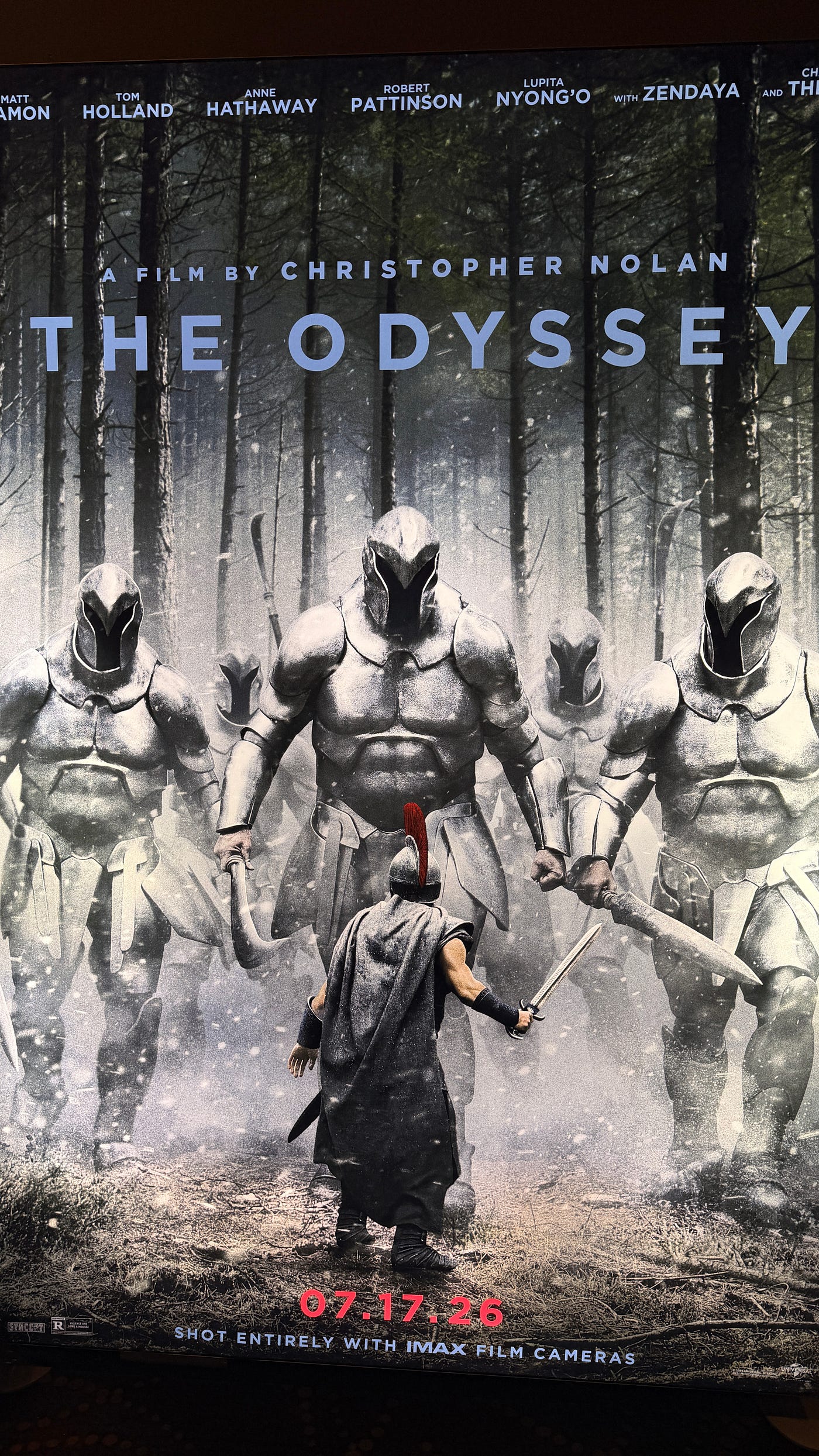
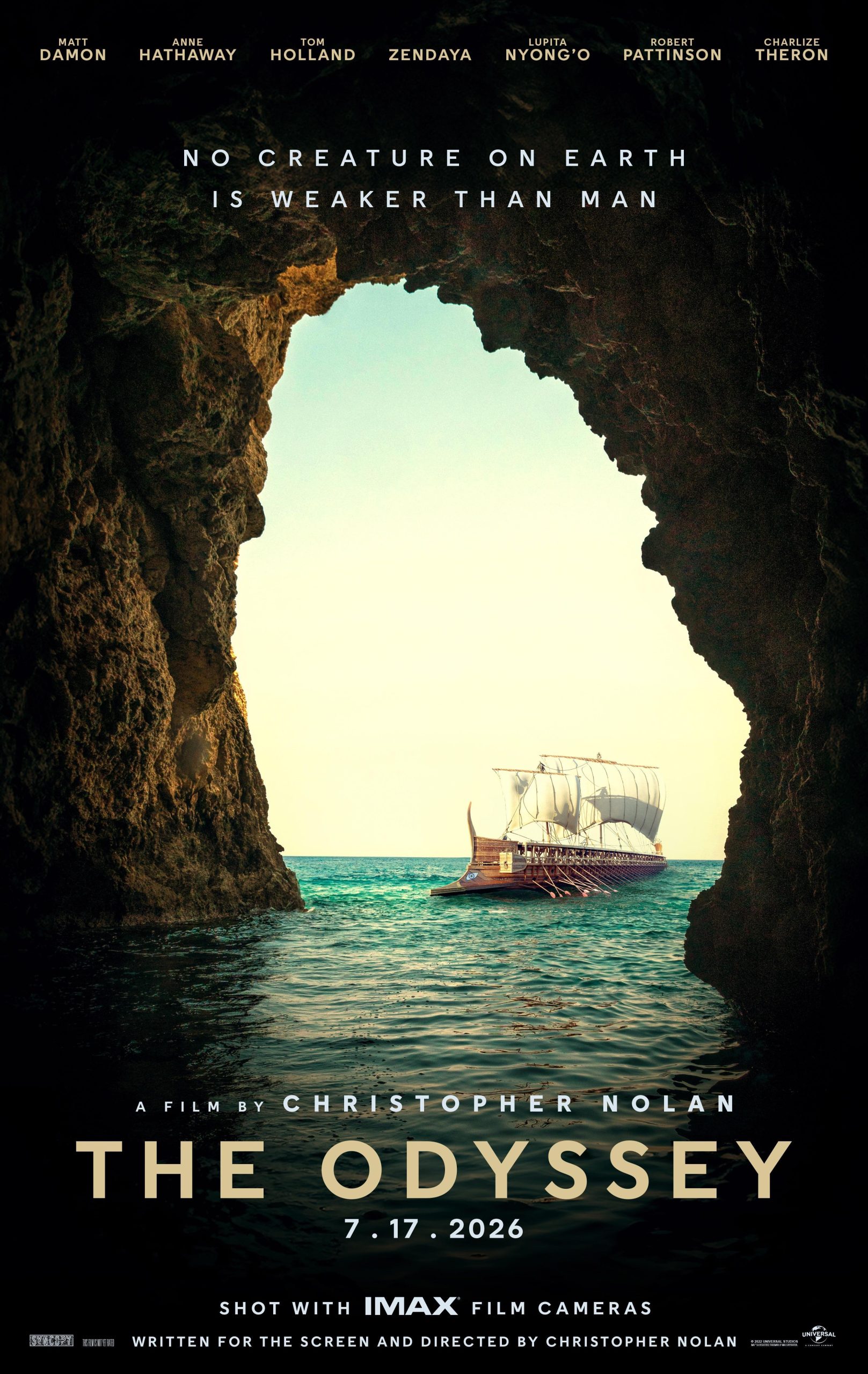
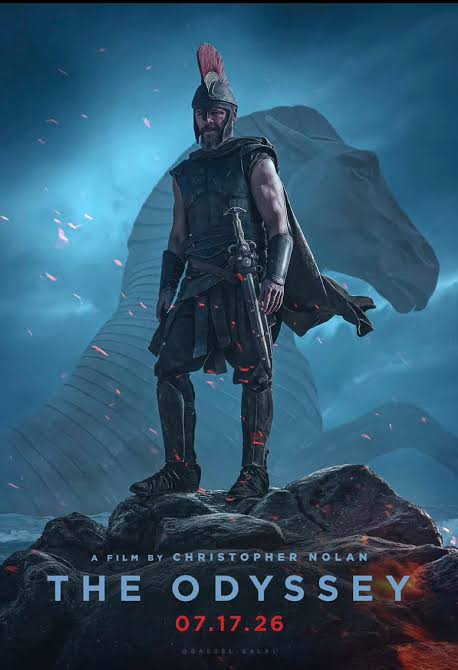
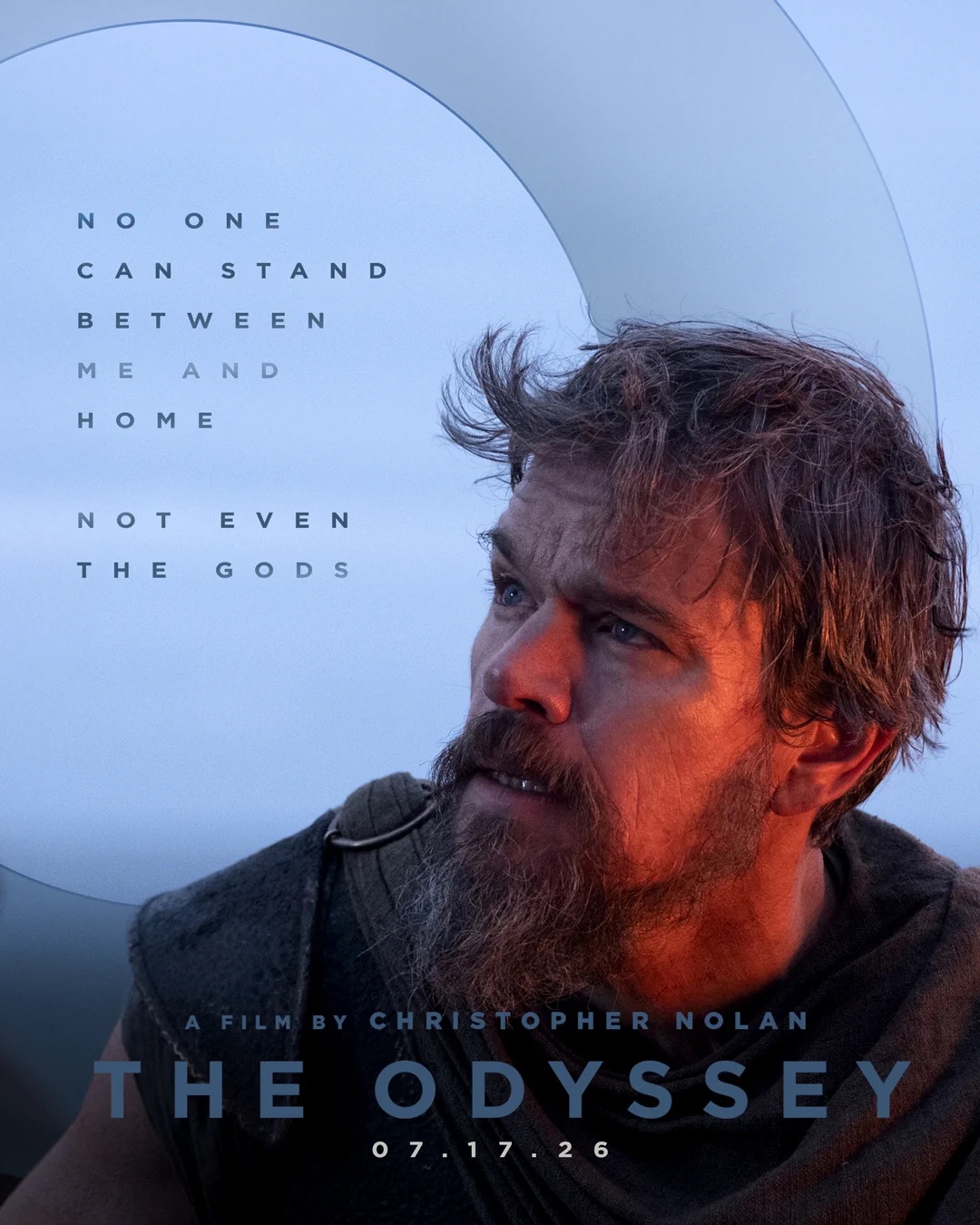
Reviews and analysis of Christopher Nolan's latest film from members of the North Carolina Film Critics Association.
The Odyssey stands as one of the breakout hits of 2026, smashing box office records and receiving widespread critical acclaim. Members of the North Carolina Film Critics Association reviewed and analyzed Christopher Nolan's adaptation of Homer’s epic poem, and we’ve compiled some of their thoughts below.
Edwin Arnaudin, writing for Asheville Movies, claims that Nolan has “outdone himself” and that the film "very well could be his greatest achievement to date." Arnaudin lauded The Odyssey’s horror elements — the Cyclops, Circe and Hades — alongside the scenes back on Ithaca.
Nicolás Delgadillo, writing for Knotfest, called the film “a staggering triumph of filmmaking” and urged readers to see it on the biggest screen possible. He wrote that the film brings together Nolan's recurring subjects — time, guilt, and the pursuit of home — and praised Matt Damon's performance.
Douglas Davidson, writing for Elements of Madness, admired how Nolan recontextualizes the epic poem as an exploration of regret and consequence, and that the gods are discussed rather than seen, which leaves responsibility for the violence with human choices.
"Gods don't make heroes, people do — and in the recitation of their deeds, tend to forget, remove, or gloss over the victims of the choices when said person is raised into notoriety." — Douglas Davidson, Elements of Madness
Ellie Lucas, writing for From the Front Row, described The Odyssey as the story of a broken man trying to lead his men home from a pointless war, and wrote about vanity, atonement, family and the chance for a new generation to succeed where the previous one failed.
Jacob Throneberry praised the film's construction and visual craft, but questioned whether Nolan was the right director for the material. He wrote that the emphasis on realism and process comes at the expense of the story's emotional core, and called the film a hit, but "not the home run I believed it would be."
Christian Jessup, writing for A Cloudy Picture, focused on the film's ending from a Christian perspective. He argues it can be read pessimistically (as humanity doomed to repeat its sins) or optimistically (where God wipes away humanity’s wrongs with a new dawn).
Gareth Higgins, writing for The Porch, saw the film three times in four days on opening week. His essay on The Odyssey covers regret, moral injury and the film’s law of sacred hospitality: treat others as you would want to be treated.
Cultures can disappear, but songs will still be sung. Truth-seekers will sing that swords are not the heart of life, hospitality should be. Our mythic spiral is supposed to confront us with a warning that when we violate the sacred worth of another, what we’re actually doing is killing God. — Gareth Higgins, The Porch
Joe George wrote several pieces on the film for Den of Geek. He called The Odyssey “a secret prequel to Dune,” wrote about Lupita Nyong'o's dual roles as Helen and Clytemnestra, and argued against Elon Musk's proposed AI "redo" of the film.
Amarú Moses, writing for Bitesize Breakdown, praised the film’s “harsh, cruel, tense, and heart pounding” tone, though he warned it can take a few minutes to get used to Nolan’s modern dialogue compared to the ancient prose.
If you’re looking for podcast or video reviews, Alan Jackson and Chris Frye reviewed the film on their Footcandle Films podcast, praising the “dramatic heft” Nolan adds to the material. Noel Manning and Thomas Manning covered the film on Meet Me at the Movies, declaring the legendary tale “the perfect match for one of today's most ambitious filmmakers.” And Gerald Morris reviewed the film for The Awards Garage, naming it a “spectacle” and singling out Anne Hathaway's performance.
NCFCA members actively engage in cinematic evaluation and critical analysis. The views expressed in the pieces linked above are those of their authors and outlets.